Why Local Competitors Are Outranking You And How To Close The Gap
If you’ve been following this series and have started paying attention to where your business shows up in local search, you may have noticed something frustrating: a competitor is consistently appearing above you, and you can’t immediately tell why. They might have fewer reviews. Their website might look worse than yours. It doesn’t always make obvious sense.
The good news is that local search ranking gaps are usually traceable. Google is evaluating a specific set of signals, and when a competitor outranks you, it’s generally because they’re stronger on one or more of those signals rather than because of something mysterious you can’t understand or fix.
The one factor you can’t change
Before getting into what you can fix, it’s worth being direct about proximity. As we covered in the Local Pack post, Google uses distance as one of three ranking factors. A competitor whose physical address is closer to the searcher’s location has a structural advantage for that search, regardless of everything else.
This doesn’t mean proximity determines everything. Strong prominence and relevance signals can partially offset distance, and many searches pull results from across a wider area. But if a competitor is two blocks from downtown and you’re across town, some of the gap is geography, and that part isn’t worth fighting.
What is worth fighting is everything else.
Review velocity is usually the biggest gap
When a local business is consistently outranking a competitor that looks otherwise similar, reviews are the most common explanation. Google’s algorithm weighs review signals at roughly 20% of local pack ranking influence according to the Whitespark 2026 Local Search Ranking Factors report. More than that: recency matters. A competitor with a steady stream of recent reviews is presenting a stronger signal than one with more total reviews that stopped coming in six months ago.
Pull up your top competitor’s Google profile and look at their review count, their average rating, and the date of their most recent review. Then look at yours. If they’re generating reviews consistently and you’re not, that’s the gap most worth closing first.
GBP completeness
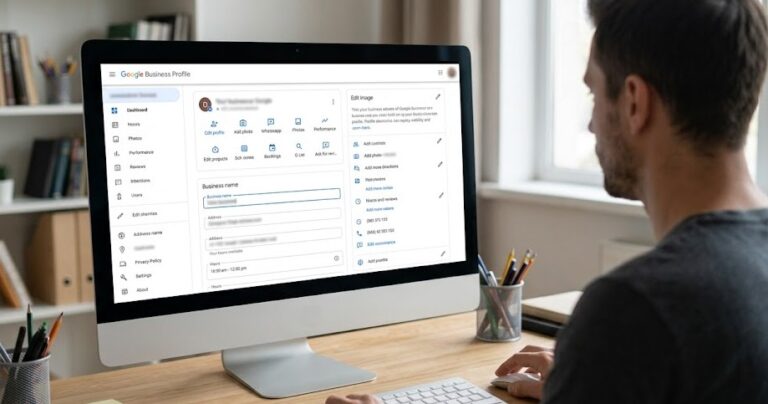
This is easy to audit manually. Pull up the competitor’s profile and your own side by side. Check their primary category against yours — as we covered in the GBP optimization post, primary category is the single most influential ranking factor according to Whitespark. If they’ve selected a more specific category than you have, that’s a concrete thing to fix.
Look at their service listings. How many individual services have they listed compared to yours? Look at their photos — how many do they have, how recent are they, and do they show actual work? Look at whether they’ve filled in their business description and whether their hours are current.
These aren’t secrets. Everything a competitor does on their GBP is publicly visible to anyone who looks.
Website authority and local content
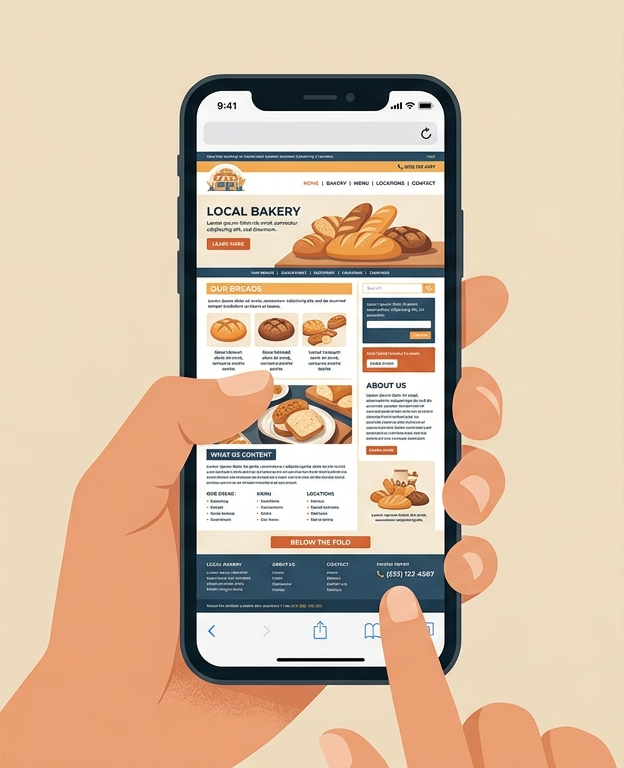
For organic rankings below the Local Pack, website strength plays a larger role. A competitor with more local content, stronger inbound links, and a site that loads faster on mobile will tend to outrank a thinner site in organic results.
This is harder to close quickly than a GBP gap. Website authority builds over time. But there are things worth checking: does your competitor have dedicated pages for individual services while you have one general services page? Do they have local content (e.g., blog posts, area-specific landing pages) that you don’t? Are their internal links structured to help Google understand what pages are about?
These are medium-term investments rather than this week’s fix, but knowing where the gap is helps you sequence the work correctly.
How to run a basic competitor audit
Search for your primary service and city name. Look at the businesses appearing above you in the Local Pack. For each one, open their profile and note their review count, their most recent review date, their primary category, their number of photos, and whether their service listings are complete. Write it down.
Then do the same for your own profile and compare. Most of the time, the gap is visible within a few minutes of looking. The competitor is winning because they’ve done the basics more thoroughly or more consistently than you have.
For website gaps, you can use a free tool like Google’s PageSpeed Insights to compare mobile speed scores, and you can manually look at how much local content they’ve published versus what’s on your site.
What to do this week
Search your primary service term and identify the top two businesses ranking above you. Spend fifteen minutes auditing their GBP against yours using the checklist above. Note the specific gaps. Then rank those gaps by which ones you’ve already covered in this series (reviews, GBP completeness, citation consistency, keywords, etc.) and start with whichever is furthest behind.
The goal is to understand what signals Google is rewarding, make sure you’re sending those signals as clearly as they are, and then continue building from there.
If you’d like help identifying where your profile and site stand relative to the competition in your specific market, our Free Visibility Audit covers exactly this.


Not sure where your local search presence stands? Our Free Visibility Audit will show you exactly where your site stands and what it might be costing you. Fill out the form below to get started.
Let’s Talk About Your Business
Fill out the form below and our team will reach out to schedule your free visibility audit — a no-pressure conversation about where your business stands online and where it could be.